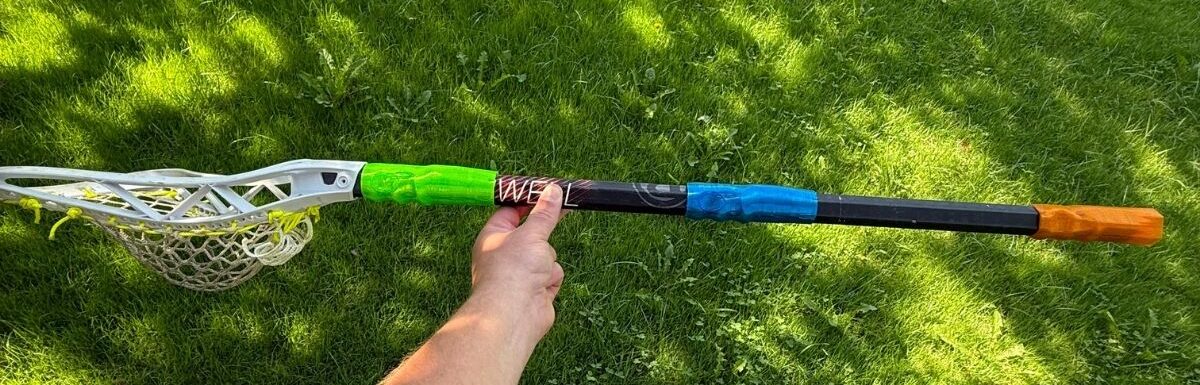
A few weeks back, our friends at Shoot-N-Scoop introduced me to Robert Kamins, the founder of LaxGripper. I’ll be honest with you: my first reaction was skepticism. As it turns out, Inside Lacrosse fell into that exact same tape trap before they got under the hood, and so did I.
Then Robert and I actually talked, and I walked away fascinated. He believes that Hand Positioning is the most overlooked fundamental skill in lacrosse. That’s why he invented the LaxGripper to help new athletes develop better hand positioning so they can improve their game quicker before they get discouraged.
Here’s the thing about hand positioning: it sounds almost too obvious when you say it out loud. But I sat there trying to remember a single coach, across all my years playing, who made it a focal point of basic instruction. I couldn’t. It just wasn’t talked about.
As PLL Maryland Whipsnakes head coach Jim Stagnitta pointed out to IL, inside their LaxGripper article, it’s a massive pet peeve in the developmental circuit: “If you don’t hold the stick properly, it impacts everything you do. If you hold the stick in the palm of your hand [instead of your fingers], it affects your passing, catching, cradling, scooping.” And he doesn’t stop at the problem. He’s a believer in the fix: “I am a firm believer that this foundational skill is necessary to being a successful lacrosse player, and I think LaxGripper hand grips provide that foundational developmental piece in order to do that properly,” Stagnitta says.
The Core Thesis
Robert’s core thesis is simple: poor grip mechanics quietly cap a young player’s ceiling. The fingers and palm never learn to nestle the handle naturally, the wrist stays too stiff to allow the development of the wrist flexibility needed, and the player plateaus, gets frustrated, and too often quits within a couple of seasons or loses enjoyment after several more seasons of struggling. Fix the grip by eliminating the “death grip” and the other grip flaws that can quietly limit skill development from day one, and you unlock the wrist flexibility needed to pass and catch instinctively. The learning curve gets dramatically shorter.
And here’s the part most people miss: the “death grip” is only one of several grip flaws, and honestly not the most common one. For the majority of kids, the bigger issue is more subtle. It’s not understanding where the top-hand thumb and palm belong on the shaft to create the wrist freedom that makes good mechanics possible in the first place. You can’t coach a clean release when the hand is in the wrong place. LaxGripper starts at that root.
The Grip Parallel
What stuck with me from talking to Robert is how fundamental grip is in nearly every other sport that relies on the hands and wrists, and how relentlessly it’s coached from day one:
- In golf, your grip dictates clubface control and clubhead speed. It’s the very first thing any instructor fixes.
- In tennis, it determines racket angle, topspin, and raw power.
- In baseball, it drives bat speed, contact consistency, and how a pitch moves.
Lacrosse simply hasn’t coached grip with that same discipline. Instead, we hand a kid a shaft and more or less expect them to figure out where their fingers go by telepathy. LaxGripper takes the guesswork out of it, and that same clarity helps players learn and develop the non-dominant hand more naturally.
Not the First to Tackle Player Execution, But a Smarter Approach
LaxGripper isn’t the first product built to help developing players execute. A few interesting ones come to mind: Phantom Pocket, a molded pocket that drops the ball when a beginner cheats their form; GripRX, an ergonomic grip shaped to the hand’s natural curve; and Warrior Warp, the factory-molded pocket that removed string maintenance entirely.
The distinction Kamins draws is that LaxGripper doesn’t force a player into one rigid way of doing things the way a fixed ergonomic mold can. It guides the hands to a starting position and then lets the player learn and own the mechanics themselves — teaching rather than enforcing. That’s a fair distinction to make between two grip philosophies, though it’s worth noting it’s Kamins’s framing of the difference rather than something we’ve tested side-by-side. Because grip sits upstream of nearly every stick skill, getting it right early does seem likely to pay off in everything that follows — but that’s a claim worth watching play out in practice.
The Product: Simple by Design
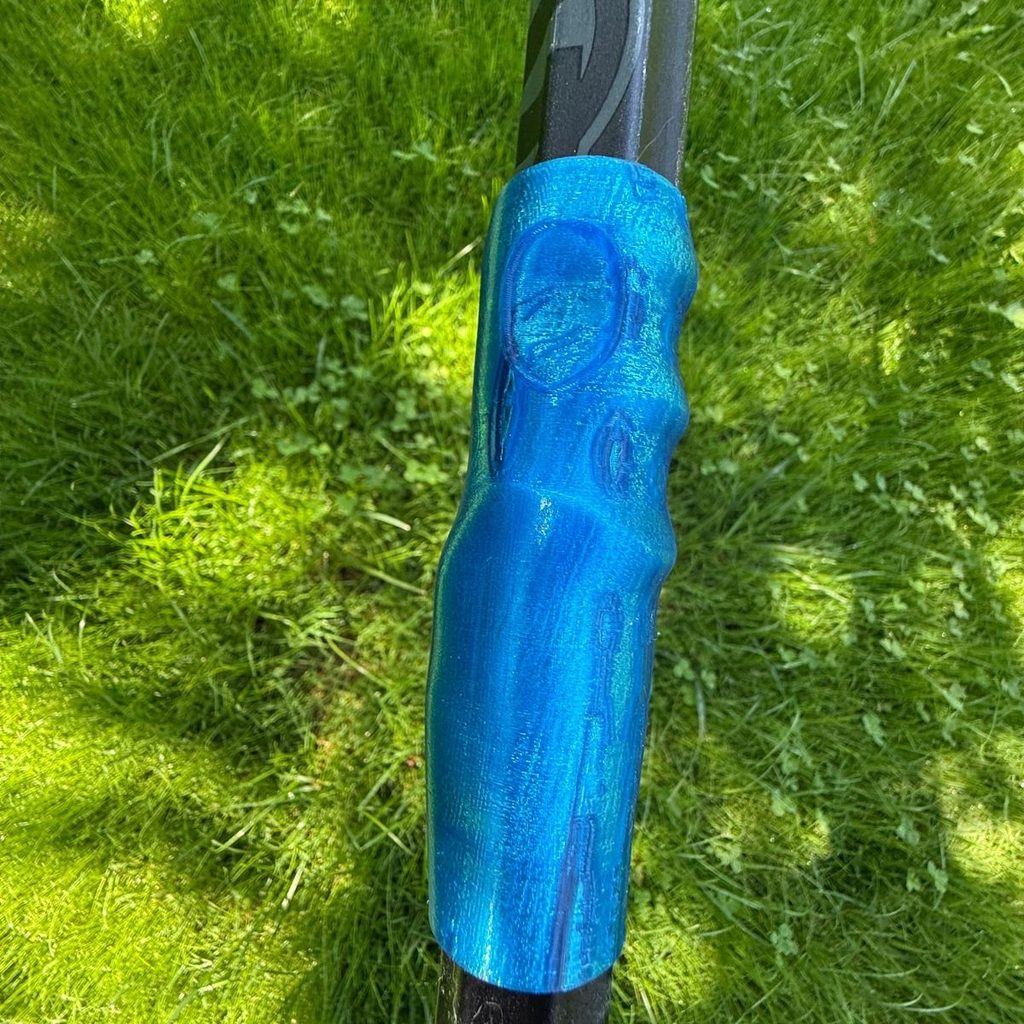
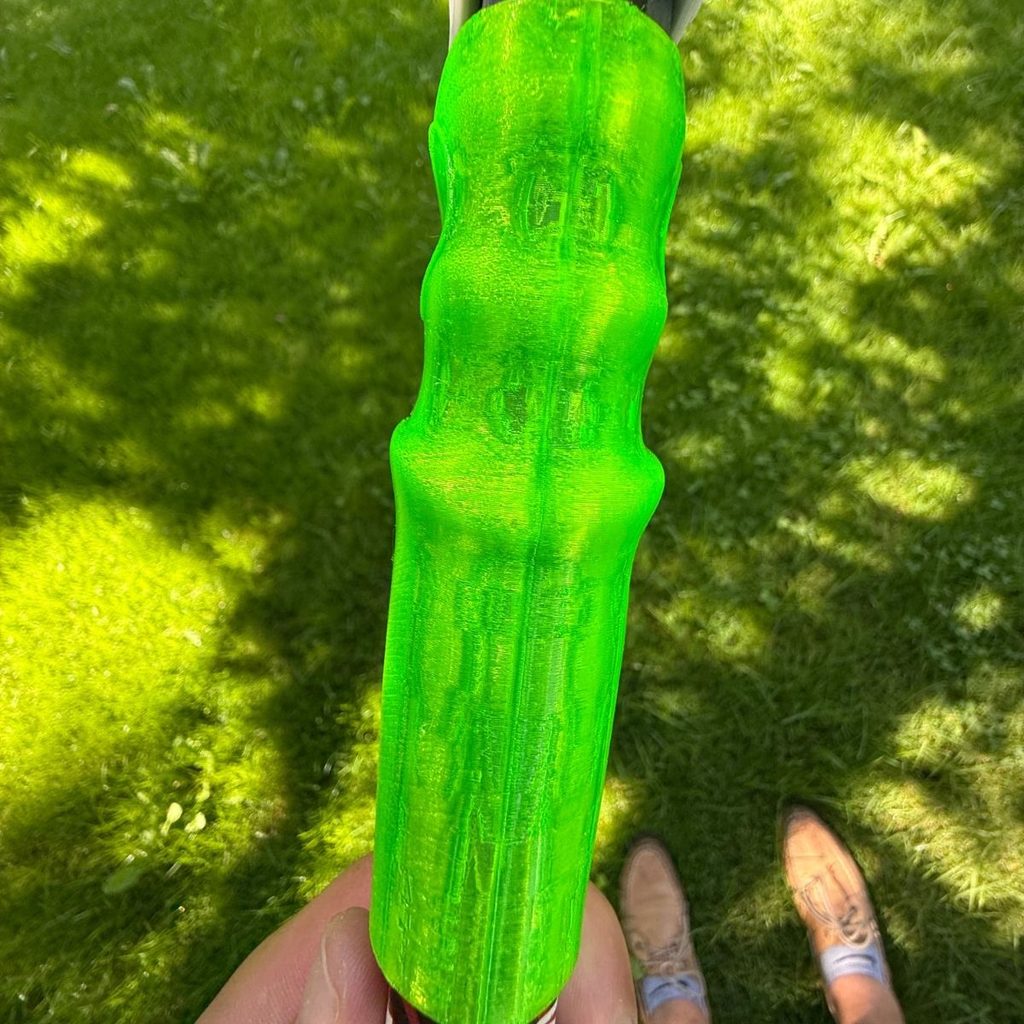
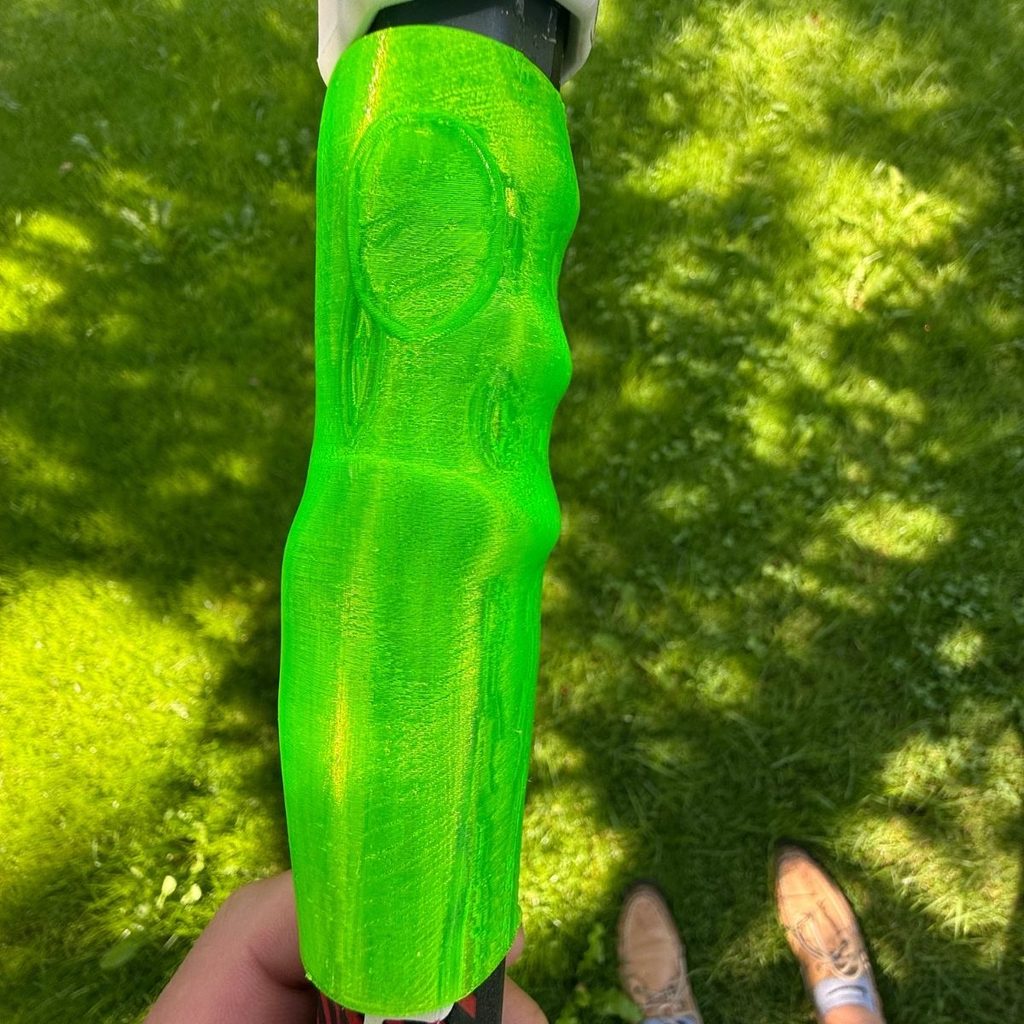
LaxGripper keeps things refreshingly simple. There are two products, the Beginner Grip and the Ambigrip, each designed with separate top-hand and bottom-hand grips to fit the shaft circumferences of boys’ and girls’ sticks:
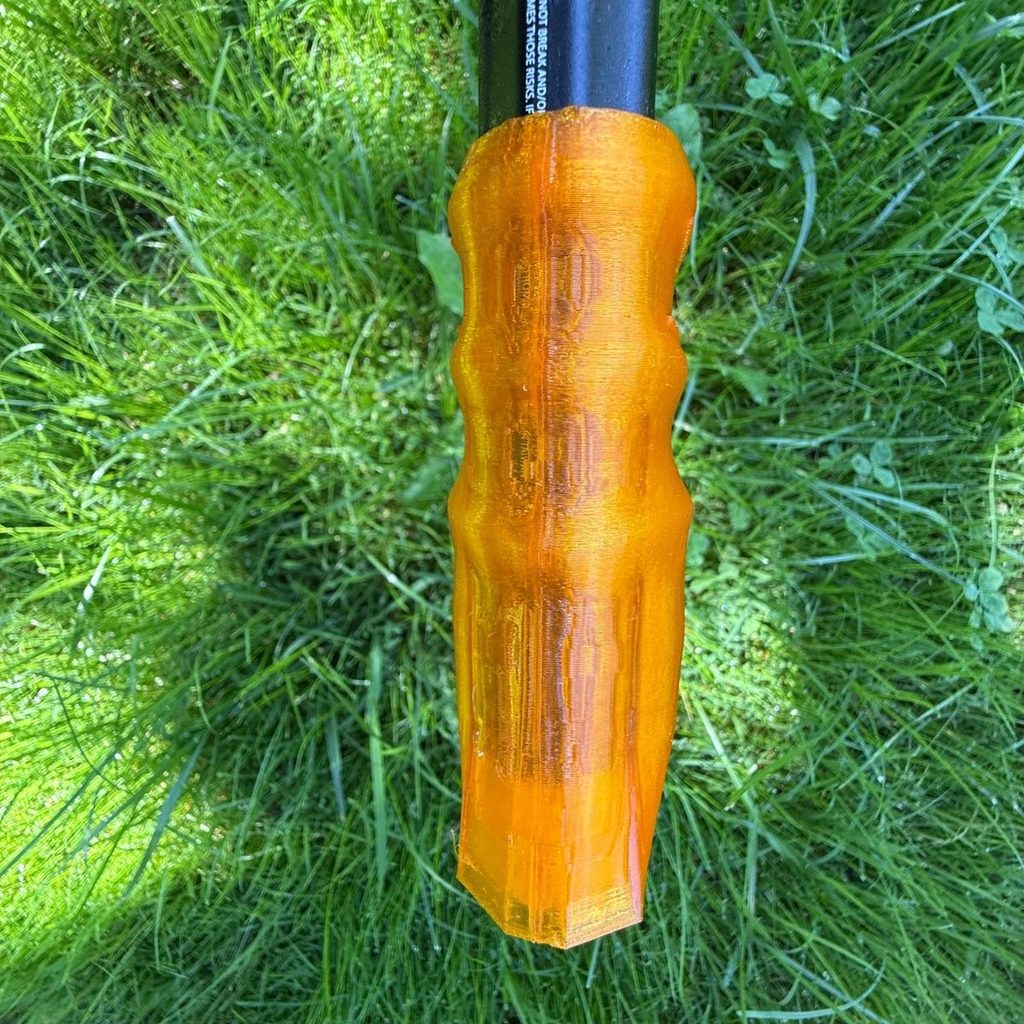
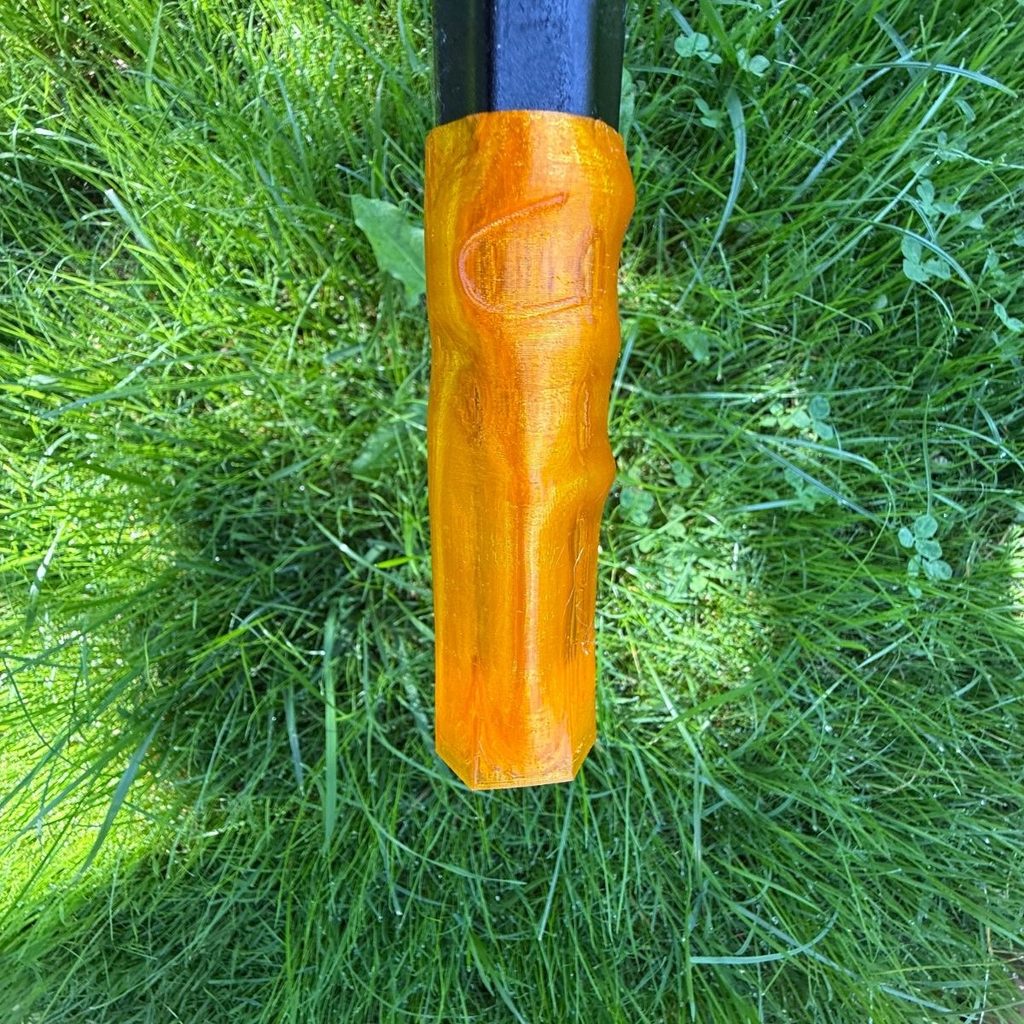
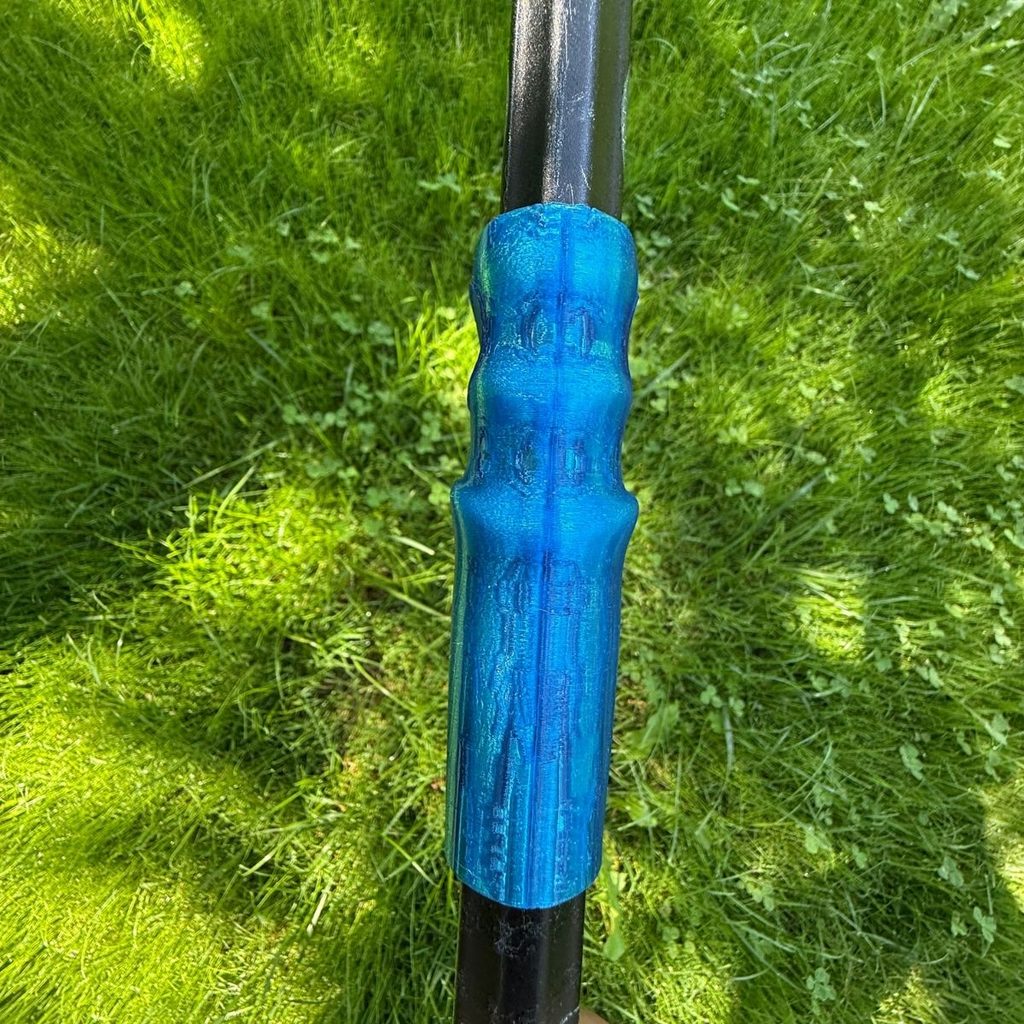
| Model | Best For | Mechanical Focus |
|---|---|---|
| Beginner Grip Single hand (dominant) | True beginners building their dominant hand first. Most players lean on their strong side, and this single-hand grip gives them the cleanest path to learn and develop the fundamentals. | The more defined of the two grips, it helps the fingers and top-hand thumb settle into place, correcting the “death grip” and other flaws while freeing the wrist for natural passing, catching, and cradling. |
| Ambigrip Both hands (ambidextrous) | Beginners through intermediate players. It teaches the same fundamentals as the Beginner Grip while developing the non-dominant hand alongside the dominant one. | Symmetrical, ambidextrous design with a slightly less pronounced shape than the Beginner Grip, so both the top and bottom hands land in the right place for either the dominant or non-dominant side. It corrects the “death grip” and other flaws, develops the non-dominant side, reinforces the dominant one, and prevents bad habits from forming. |
Installation is genuinely easy: you slide the grip over a calculated piece of tape on the shaft for a snug, twist-free fit. Robert has step-by-step video tutorials for the Beginner Grip and Ambigrip on his website.
Hows it help with Coaching
This is where LaxGripper moves from personal training aid to something coaches can actually use at scale, and it comes down to one word: visual. Kamins — who grew up playing close defense on Long Island before playing at Lehigh — built this out of the frustration of coaching his own four kids.
Instead of a coach burning half a practice walking player to player repositioning fingers one at a time, the color-coded grips let a coach call out macro-instructions from across the field — “top hand on green to scoop,” “top hand on blue to pass” — and team reps speed up immediately.
It also does some of the work when no coach is around: a kid working alone in the backyard still has the visual cue reinforcing correct hand placement rep after rep. As Stagnitta put it to Inside Lacrosse, “I think LaxGripper is a great tool for young players and even youth coaches because it emphasizes those fundamentals. I see a ton of value as a developmental teaching tool.”
It’s also worth noting the design isn’t aimed only at future high school or college players. Most kids who pick up a stick are average athletes, and the tool is built to meet them where they are — while, in Kamins’s view, also giving a head start to the ones with higher ceilings. Good hands early is the kind of edge that tends to compound either way.
The Bottom Line
Hand positioning is a fundamental our sport hasn’t prioritized the way golf, tennis, and baseball prioritize grip — that part of Kamins’s argument holds up on its own logic, independent of any one product. LaxGripper is a clean, well-thought-out attempt to fix that gap, and the early coaching endorsements are a great sign. I’ve had one in my own hands now, and I get why Kamins is so fired up about it. If it does for a wider group of kids what it did for me, that’s a real shift in how this generation learns the game — not just a nice-to-have training aid.
So I’ll throw it to you: do you remember a coach ever explicitly teaching you how to hold your stick, or did you just figure it out on your own?